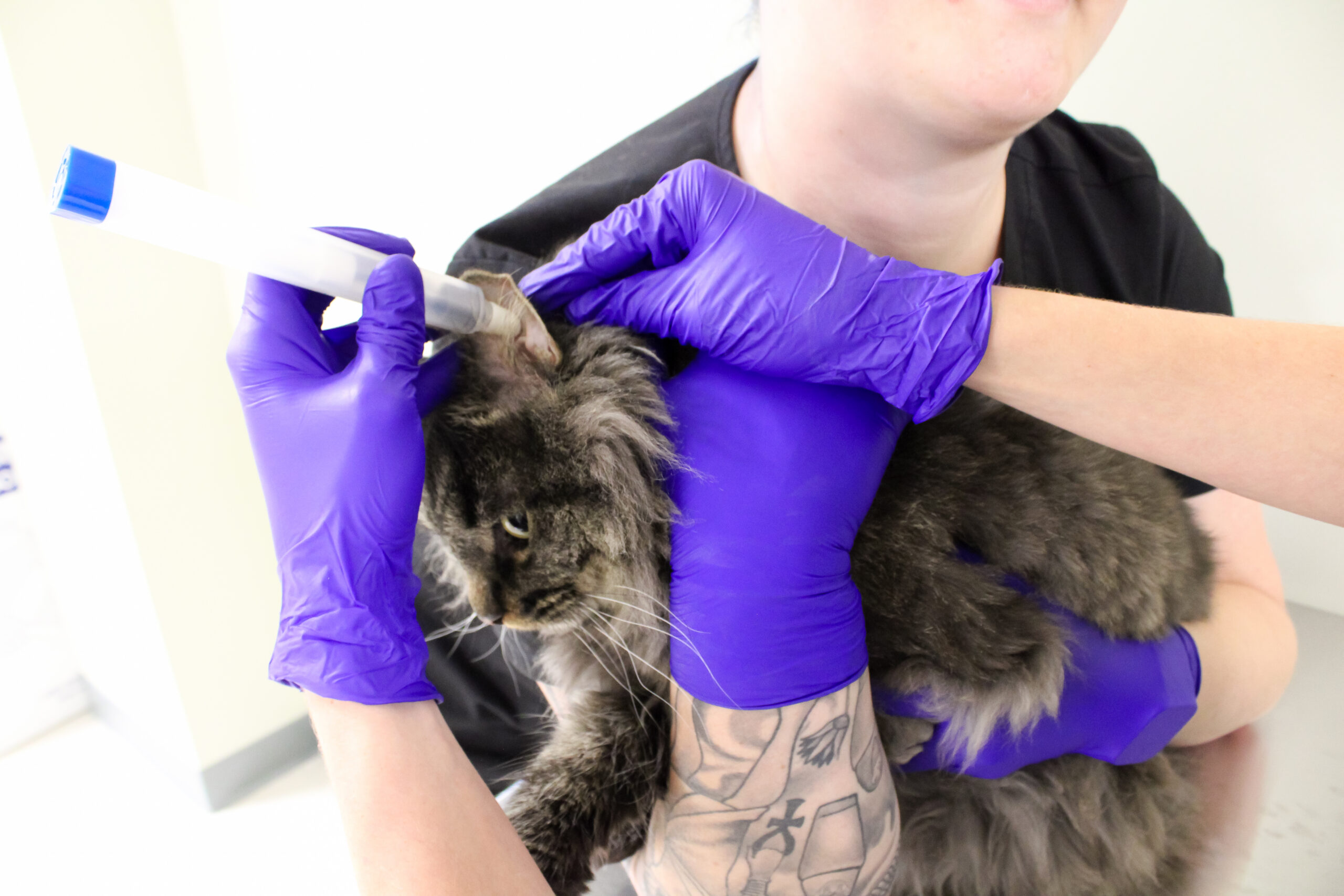
Transdermal medications are easy to like, and for good reason. They are often less stressful for both the patient and the caregiver, particularly in cats that are difficult to medicate orally. In many practices, they have come to represent a more compassionate approach to care. In certain situations, they are absolutely the right choice.
The challenge is that convenience and clinical reliability are not the same thing.
Changing a drug to a transdermal route is not a simple substitution. It alters how the drug enters the body, how much is absorbed, and how predictable the response will be. In human medicine, transdermal products are developed through extensive formulation work, permeability studies, and pharmacokinetic validation. In veterinary medicine, most transdermal use relies on extrapolation, which introduces a level of uncertainty that is not always fully appreciated.
The skin itself is a significant barrier. Drug absorption depends on factors such as molecular size, lipophilicity, concentration gradient, the composition of the base, and the site of application. In veterinary patients, additional variability is introduced by grooming behavior, hair density, and species-specific differences in skin structure. As a result, two patients receiving the same preparation may experience very different levels of drug exposure.